The Under-$80 Dance Bag: A Kikuta Beginner's First-Month Buying Guide
First month at Kikuta, the shopping list can feel louder than the music. There are ballet flats, jazz shoes, leggings, leotards, hair ties, water bottles, and about forty videos insisting that real dancers own a specific brand of everything. Take a breath. You do not need a pro wardrobe to start. You need safe shoes, clothes you can move in, and a bag you can zip without a small crisis.
This guide is built for a realistic US budget: roughly $75 to $80 if you already own basic workout clothes, and closer to $110 if you are starting from zero. The goal is not to look the part. It is to show up to class ready to learn.
Start With What You Already Own
Before you buy anything, raid your closet. Most beginners already have a fitted T-shirt, leggings, shorts, a sports bra, and socks that can handle a warm-up. At Kikuta, the dress code is less about matching and more about letting teachers see your alignment. Fitted clothes help. Baggy clothes hide knees, hips, and shoulders, which makes corrections harder to give and harder to feel.
For ballet, a simple leotard and tights are classic for a reason, but they are not mandatory for every beginner class. Ask the front desk what your specific class expects. For jazz, fitted tops with leggings or shorts are standard. For contemporary, many students wear leggings and a fitted top, then work barefoot or in socks depending on the teacher. Do not buy four outfits for three styles before your first week. Wear what you have, see the room, then fill gaps.
The Short List: What Actually Earns a Spot in Your Bag
Here is the honest starter checklist for a Kikuta beginner in 2026:
- One fitted top or leotard you can move in
- One pair of leggings or dance shorts
- Ballet shoes, properly fitted
- Jazz shoes, if your jazz class requires them
- Water bottle with a closeable lid
- Small towel or hand towel
- Hair ties and bobby pins
- Small notebook or notes app for class vocabulary
- One light layer for warm-up
- A small dance bag or sturdy tote
That is it. You do not need a garment bag, a rolling suitcase, three backup leotards, leg warmers in four colors, or a theatrical makeup kit for a Tuesday beginner class. Those can come later, if they ever do.
Shoes: The One Place to Spend Carefully
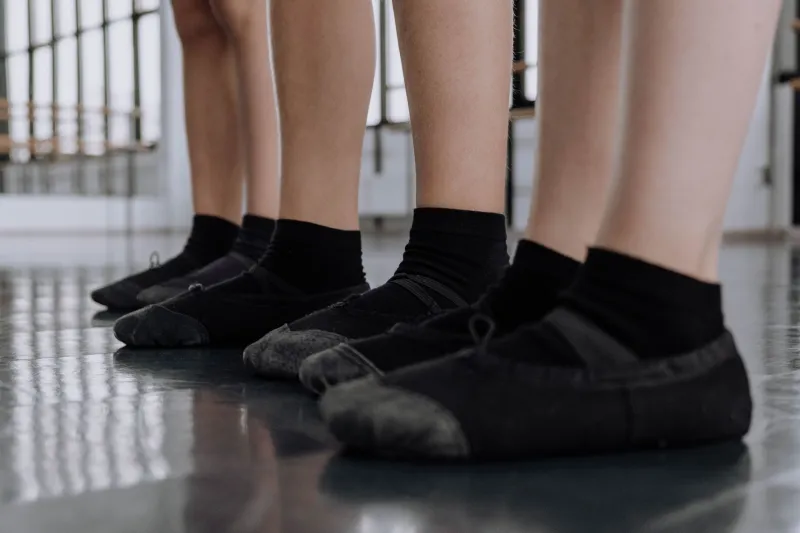
Shoes are the part of the kit where cheap can become expensive. Ballet shoes should feel snug but not painful. There should be no pinching at the toes and no loose heel that slides off during tendus. Leather or canvas both work for beginners; canvas tends to be cheaper and cooler, while leather stretches and wears differently. Ask a teacher or studio staff member before ordering online if you are between sizes.
Jazz shoes should flex with the foot without swimming around. A slippery sole is a safety issue, and so is a sole with zero grip on a studio floor. Never wear street shoes into the dance room. If you are trying dance sneakers, test them on the actual studio floor before committing. And if anyone tries to sell you pointe shoes during your first month, politely run.
Clothing safety matters too. Avoid long necklaces, loose bracelets, and pants that pool around your ankles. Secure long hair so it does not whip your neighbor during turns. Layers are smart for warm-ups, but they should come off easily. If a skirt or top makes you feel self-conscious, it will distract you from the actual work.
What to Borrow, Buy Used, or Skip
Ask Kikuta's front desk whether there is a loaner bin or a shoe swap. Many studios have a graveyard of gently used ballet slippers from students who guessed the wrong size. A used pair in good condition is fine for a first month. Check the soles, stitching, and elastic. Wash anything fabric that touches skin, and never borrow tights or undergarments.
Local dancewear consignment shops, Facebook Marketplace, and neighborhood parent groups are good places to find beginner gear. Buy neutral colors so pieces work across classes. Skip the expensive brand leotard for now. Skip the matching warm-up set. Skip anything that requires special washing instructions before you have even learned the combo.
The $75-ish Blueprint
Here is one workable budget if you already own leggings and a T-shirt:
- Ballet shoes: $22 to $30
- Jazz shoes: $30 to $38
- Water bottle: $8 to $12
- Resistance band for home practice: $7 to $10
- Small towel: $5
That lands around $72 to $95 depending on sales and shoe sizes. If you need to buy clothes too, add $20 to $30 for a fitted top and leggings from a discount store. That is still far below the cost of a single trendy dance outfit online.
Money-saving moves that actually work: ask about studio shoe-fitting days, buy during back-to-school or January sales, check clearance sections for neutral colors, and wait one week before buying anything you saw on social media. Beginner dance does not require a haul video.
A Checklist You Can Screenshot
Before your first class, confirm these five things:
- Shoes fit and are dance-only shoes.
- Clothes stay in place through a squat and a reach.
- Hair is secure.
- Water bottle is full.
- You know the studio address and arrival time.
Everything else is optional. A notebook is useful. A resistance band is nice. A second pair of tights is not urgent.
The Real Goal: Show Up
The best first-month purchase is not a specific leotard. It is a little breathing room in your budget so you can keep coming back. At Kikuta, beginners are not judged by their gear. They are welcomed for walking through the door, learning the counts, and trying again next week. Build a simple bag, spend where safety matters, and save the rest for class.