The Quiet Habit: What Kikuta's Quickest Students Write Down (and Why It Works)
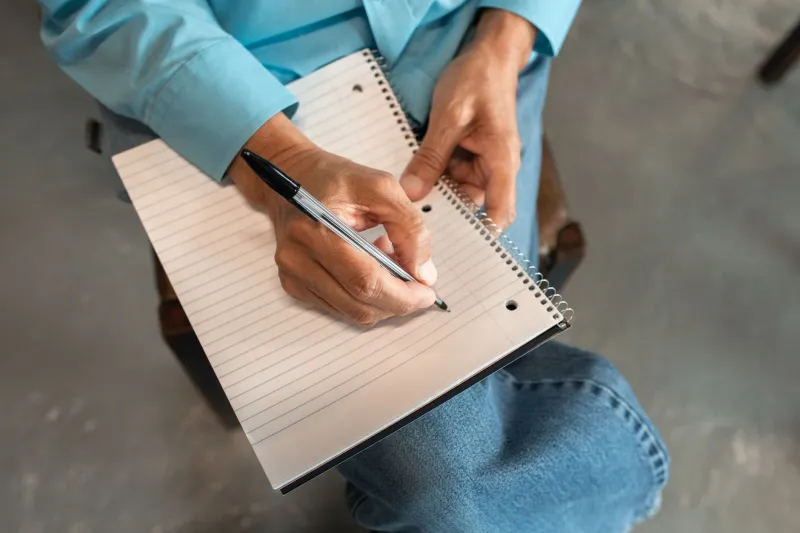
There is a dancer in the Thursday contemporary class who has never once been the bendiest person in the room. She is not the one who gets pulled to the front for demonstrations. But she picks up the eight-count faster than anyone else, and when the teacher says 'same thing, remember the arm change,' she is already there. After class, she sits on the floor by the mirror and writes for about ninety seconds in a beat-up spiral notebook.
That notebook is the whole trick. Not talent, not a secret warm-up, not private coaching. She writes things down.
Attendance Is Not the Same as Progress
Most of us treat a dance class as something to get through — show up, sweat, stretch, go home, hope some of it sticks. And some of it does. But there is a real gap between the dancers who attend and the dancers who advance, and it usually is not about hours logged. It is about whether the information survives the parking lot.
A combination taught on Tuesday is gone by Thursday for most students. Not because they were not paying attention, but because a sixty-minute class throws roughly forty pieces of information at you — counts, directions, corrections, musical cues, names of steps you have never heard before. Your brain is busy dancing. It cannot also be a filing cabinet.
The notebook is the filing cabinet.
Four Systems That Students Actually Keep Using
A lot of note-taking advice sounds great and dies in week two. These are the formats that seem to survive contact with real class schedules.
1. Count sheets
Just the numbers and the words. '1–4 step-touch right, 5–6 passe, 7–8 prep.' No prose, no description, nothing pretty. A count sheet is the fastest thing to write and the easiest thing to read on a phone in the car before rehearsal.
2. Shorthand symbols
Every regular note-taker develops a private alphabet. An arrow for travel. A little box for a hold. A squiggle for 'teacher said this four times.' You do not need a standardized system — you need one you can decode three days later, and you will be shocked how quickly your own shorthand becomes legible.
3. Video timestamp logs
Many Kikuta teachers post a clip of the combination in the class group chat. Instead of rewatching the whole three-minute video hunting for the tricky transition, dancers with notebooks write something like '0:48 — the turn into the corner, watch the left arm.' That one line saves ten minutes of scrubbing.
4. A corrections column
The most useful page in any notebook is the least glamorous: a running list of corrections you have received more than once. If a teacher has told you to lift your chin and spot sooner in three separate classes, that is not a mistake anymore. It is a pattern, and patterns are the fastest place to improve.
What a Real Page Looks Like
It is not beautiful. It is not bullet-journaled. A typical page has a date, a class name, a scrawled eight-count grid, two arrows, a note that says 'ask about the head roll,' and one correction written in all caps. That is it. Maybe forty words.
The students who try to write everything quit within a month, because writing everything takes twenty minutes and nobody has twenty minutes. The students who write three things are still doing it a year later.
The Two-Minute Rule
If you want to try this, here is the version with the highest odds of sticking: write for two minutes, immediately after class, before you talk to anyone. Three items only.
- One thing you want to remember from the combination.
- One correction you received.
- One question to ask next week.
That is the whole practice. Do it for a month and you will walk into rehearsal with more recall than dancers who have been taking class twice as long.
A Note for Teachers
Notebooks do not need to become a requirement, and they definitely should not become graded homework — the second you assign it, half the room resents it. What works better is modeling. Mention your own correction log. Give a single 'write this one down' cue when you teach something genuinely tricky. Ask at the top of class, casually, whether anyone remembers the transition from last week — the dancers who wrote it down will light up, and everyone else will notice.
The quiet skill is not note-taking for its own sake. It is treating your class time as something worth keeping. A two-dollar spiral notebook does that better than almost anything else in the dance bag.