The Gravy-Proof Reset: Keeping Your Barre Warm Through Thanksgiving Week
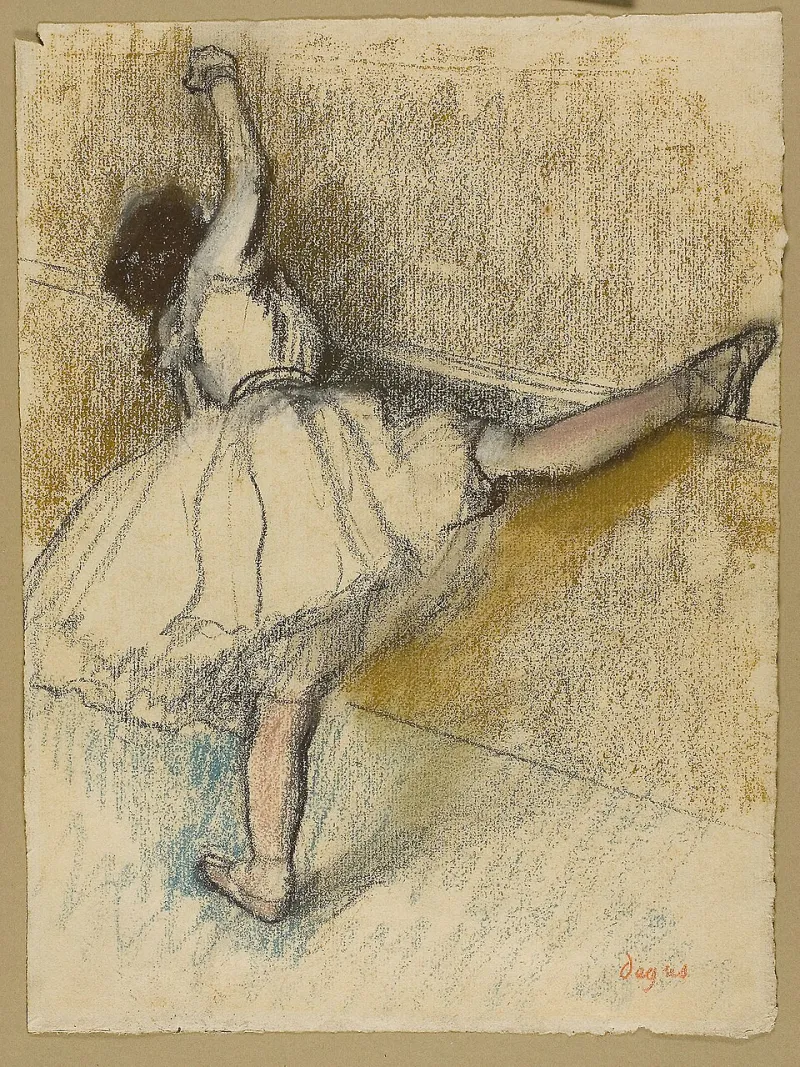
Photo: Edgar Degas, Public domain, via Wikimedia Commons
Thanksgiving week has a way of rearranging a dance schedule. There’s the Wednesday night drive, the cousin who wants to see the recital video, the kitchen that smells like butter, and the class you’ll miss on Thursday. At Kikuta, we hear the same question every November: how much do I need to do so I don’t come back feeling like I’ve forgotten everything? The short answer: less than you think, but more intentionally than you might expect. This is a reset plan, not a second studio schedule.
Start With Fifteen Minutes, Not a Full Class
You do not need to recreate your Tuesday technique class in a hotel room. You need a short, repeatable reset that reminds your body what turnout feels like and gives your brain a small anchor. Find a patch of carpet, a kitchen floor, or a hotel room corner. You don’t need a barre; a countertop, dresser, or wall works for balance. Set a timer for fifteen minutes and move through this:
- 1 minute: stand tall, roll down slowly, and roll up one vertebra at a time.
- 2 minutes: foot articulation, one foot at a time, with slow circles and points.
- 2 minutes: slow relevés in parallel and turned-out, holding the counter lightly.
- 3 minutes: tendus front, side, and back, small and controlled.
- 2 minutes: plié and passé, no music, no mirror.
- 2 minutes: hip flexor and calf stretch.
- 2 minutes: balance on one foot, then the other, eyes on a fixed point.
- 1 minute: shake out and breathe.
That’s it. Fifteen minutes. If you’re in a hotel room with thin walls, skip anything that thumps. This is not conditioning; it’s a reminder. The goal is to finish feeling looser and more awake, not wiped out.
What Goes in the Dance Bag, Even If the Bag Stays in the Car
A Thanksgiving dance bag should be a reset kit, not a wardrobe. Pack light: a resistance band, a small ball or tennis ball, a hand towel, a notebook and pen, spare hair ties, a water bottle, and one pair of socks for slippery hotel carpet. If there’s room, add ballet flats, but don’t make the trip about equipment. The band is for gentle ankle and hip work. The ball is for tight spots. The notebook is for the one correction you want to remember when class resumes. Parents, this is also the week to resist the urge to schedule a Friday make-up class just because the studio is closed. A calm bag by the door beats a frantic scramble on Sunday night.
Rest Is a Skill, and Thanksgiving Is a Good Place to Practice It
Here’s the part dancers often skip: productive rest. Two full off days are not a crisis. A week without class is not a crisis. A week of anxious, half-hearted cramming in a hallway is worse. Sleep in if you can. Take a walk after dinner. Stretch while the parade is on. If you’re traveling, count the airport walk as movement and the stairs at your aunt’s house as a mini warm-up. What you want to avoid is the Sunday-night panic session where you try to make up for five lost days in one hour. That’s how dancers get sore, tired, and weirdly disconnected from their technique. Rest is not the enemy of progress; it’s the phase where the body files away the corrections you’ve been collecting.
The First Class Back Is a Landing, Not a Test
The first class back after Thanksgiving should feel like returning to a conversation, not defending a thesis. Arrive early enough to do the hallway warm-up. Tell your teacher if you were off for several days; Kikuta teachers would rather hear that than watch you hide a stiff ankle. Pick one thing to focus on — maybe it’s keeping your ribs stacked during adagio, maybe it’s articulating through the floor in tendu — and let the rest be rust. Rust is information, not failure. It tells you where your body wants a little more attention this week. The dancers who come back loose and focused are usually the ones who did a few short resets and then let themselves rest, not the ones who crammed every free hour with a barre.
The Night-Before Ten Minutes
The night before your first class back, do ten minutes of prep. Put your dance bag by the door. Set out your clothes. Fill your water bottle. Write one sentence in your notebook about what you want to feel in class, not what you want to prove. Then go to sleep. Thanksgiving break is supposed to be a break. Keep the reset small, keep the rest real, and let the first class back be a place to start again — not a place to pay off a debt.