The Pocket-Sized Rehearsal: Why Kikuta Dancers Practice Without Moving Much
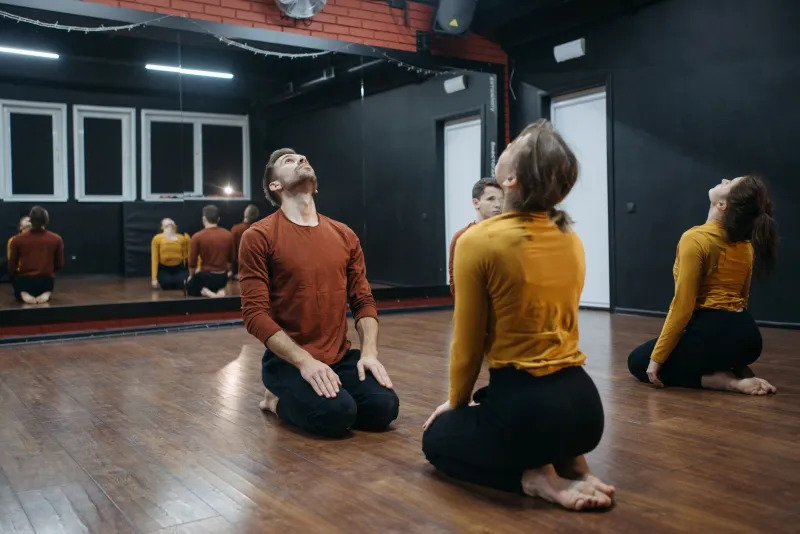
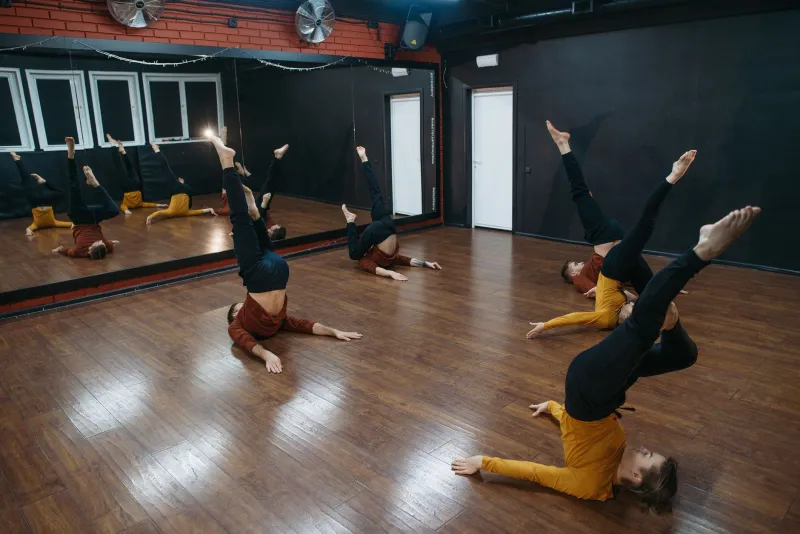
At Kikuta, there is a moment that surprises almost every new student. The teacher finishes explaining a combination, the music is about to start, and instead of saying, “From the top, full out,” she says, “Mark it first.”
A few people nod. A few people look around. Marking can sound like a warm-up, or a way to go easy, or something only advanced dancers do. It is none of those things. At Kikuta, marking is a real rehearsal tool, and it might be the most useful ten minutes a dancer spends all week.
What Marking Actually Is
Marking is low-effort movement paired with high-focus thinking. Dancers use smaller gestures, half-size steps, and quiet counts to run through choreography without burning the same energy as a full-out pass. The body is still involved, but the brain is doing most of the work.
That does not mean waving your hands vaguely while thinking about dinner. Good marking has a job. You are saying the counts, tracing the pathways, naming the transitions, and picturing where you need to be. You are checking the map before you drive the route at full speed.
Kikuta teachers often put it simply: if you can say it, you can dance it. If you cannot say where the turn happens or which foot closes first, going full out will probably hide the confusion under momentum. Marking slows everything down enough to catch the blur.
Why Kikuta Teachers Ask for It First
Full-out dancing is fun. It is also noisy in the best sense. The music is loud, the legs are moving, and the brain can skip over gaps because the body is busy. Marking turns the volume down. Dancers hear the count, see the path, and notice the places where they usually guess.
It also saves wear and tear. A dancers legs do not need five maximum-energy passes before the choreography is even clear. In a mixed-level class, marking lets beginners learn the shape of the combination without feeling like they are already behind. For more experienced students, it exposes habits that speed can cover up.
And backstage, marking is a lifesaver. There is rarely room for a full run in a wing or a hallway. There is almost always room to count under your breath, trace a hand through the air, and think through the first eight counts.
The 10-Minute Pocket Routine
This is the routine Kikuta dancers can use between classes, in a car, on a plane, or in the quiet corner of a theater lobby. No studio required.
Minutes 1 and 2: Say the counts
No music. Say the counts out loud if you can, or whisper them if you cannot. Add the step names: right, left, turn, close. Do not worry about making it pretty. You are checking whether the sequence is actually in your head.
Minutes 3 and 4: Trace the pathway
Use one finger or tiny steps to map where you travel. Front corner to center. Back to the left. Turn toward the audience. If you are sitting, trace the path on your knee or in the air. The point is to connect the count to a place onstage.
Minutes 5 and 6: Name the transitions
Transitions are where most mistakes live. Say them out loud: right foot closes, head turns, arms lift, weight shifts. Mark only the tricky parts. You do not need to perform the whole combination. You need to find the seams.
Minutes 7 and 8: Add music, at half speed
If you have earbuds, use them. Mark the combination with the music, but keep everything small. Hum the counts if that helps. The goal is not to look like the final performance. The goal is to hear where the choreography and the music lock together.
Minutes 9 and 10: Run the mental movie
Close your eyes and picture the combination from your own point of view. See the room, the lights, your first position. If you get lost, open your eyes, check the count, and start again. If you have space, finish with one calm full-out run. If you do not, stop with the movie. That still counts.
How to Do This Without Feeling Weird
Adult students often say they feel awkward marking alone. That is normal. The trick is to make it small and boring. Count under your breath. Move one hand. Stare at the floor like you are thinking about your grocery list. Nobody in a coffee shop knows you are rehearsing. They think you are waiting for a text.
Parents, the same goes for the car. If your dancer is in the passenger seat with earbuds, eyes half closed, and one hand tracing a circle, let it happen. That may be the most productive five minutes of their day. You do not need to quiz them. You do not need to correct them. You can just drive.
For Parents and Adult Dancers: Keep It Low Pressure
If you want to support a dancer at home, ask a simple question: which part are you marking? Or, show me the count where you turn. Keep it curious, not corrective. Marking works best when it feels like a tool, not a test.
For adult students, try attaching marking to something you already do. Mark counts while the kettle boils. Trace pathways while you wait for the bus. Run the mental movie before bed. It is not extra studio time. It is just using the time you already have.
The Payoff on Stage
Marking will not replace rehearsal. Bodies need real repetitions, real sweat, and real music. But marking makes those repetitions smarter. It helps dancers walk into a Kikuta class or a performance with a map already in their heads.
The music will be loud. The lights will be warm. The nerves will show up whether you invited them or not. The marking you did in the car, the hallway, or the quiet corner might be the reason you find your spot anyway.