The Observation Window Is Not a Scorecard: A Kikuta Parent’s Guide to Watching Without Coaching

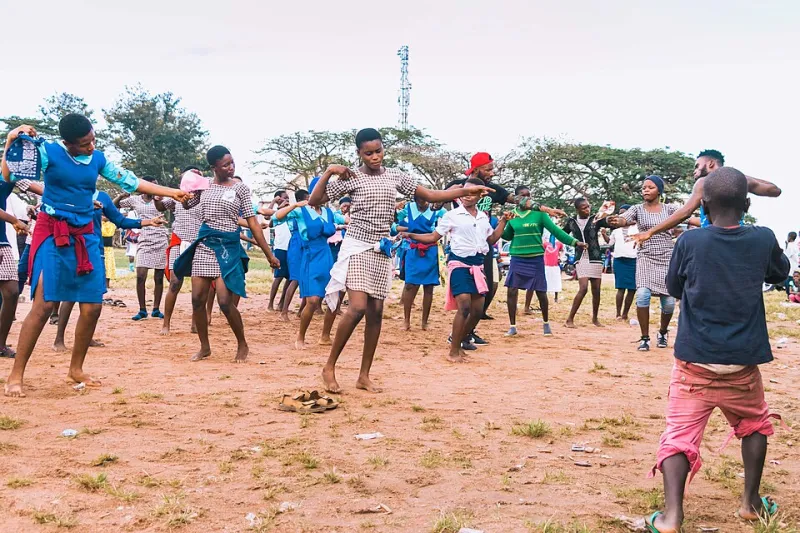
Photo: Mohammadzand.photo, CC BY-SA 4.0, via Wikimedia Commons
At Kikuta, the observation window is one of the friendliest parts of the studio: a little glass rectangle where grandparents, siblings, and exhausted parents can peek in without disrupting the room. It is also, if we are honest, a trap. Not because parents are nosy — because dance class is a long game, and a single Tuesday-night glance is a terrible scorecard.
Here is a parent’s guide to watching class without becoming the hallway coach.
The Window Has a Job. It Isn’t Yours.
The observation window is there for reassurance, not real-time review. You are allowed to see that your dancer is safe, engaged, and in the right room. You are not there to grade the plié.
A few etiquette basics go a long way. Arrive early enough to settle in without a production. Put your phone on silent — not vibrate, silent — and keep it out of the glass. Don’t tap, wave, mouth counts, or make “fix your arm” gestures through the window. Your dancer will look. They always look. And when they look, they lose the thread of the class.
If you arrive late, wait until the teacher is between exercises before slipping into the hallway. Keep younger siblings from pressing against the window like it’s a aquarium. If the studio asks observers to stay in a certain area or use the monitor instead of the window, follow that. Observation is a privilege, and it works best when it feels invisible.
What to Notice — and What to Let Go
Over weeks, the window can tell you useful things. Does your dancer settle into the barre routine? Do they listen when the teacher gives a correction? Do they recover after a mistake, or do they freeze? Do they ask questions, help a classmate find their spot, or keep going when they’re tired? Those are the patterns worth noticing.
Notice the teacher’s language, too. At Kikuta, instructors tend to build corrections in layers — a small image, a repeat, a joke, a second try. If your dancer looks confused in the moment, that doesn’t mean the class is failing. It means they are learning in public, which is what dance class is.
What should you let go? The escapee ponytail. The one missed count. The fact that your kid chose the back row. The outfit that doesn’t match the picture in your head. The serious face that doesn’t mean unhappiness. The classmate who seems further ahead. A single class is not a verdict. The kid who looks lost in week one may be the kid who owns the combination by week six.
The Hallway-Coach Trap
The hallway-coach trap is simple: you see something, you correct it in the car. It feels helpful. It almost never is.
Technical corrections belong to the teacher. When a parent delivers a correction — “You were late on the turn,” “Point your foot,” “Why weren’t you in front?” — the dancer gets two sets of instructions, two sets of authority, and a fresh dose of self-consciousness. It also teaches them that class is a performance for you rather than a place to practice.
The better move is curiosity. Ask what the teacher said. Ask what felt tricky. Ask what they want to work on. If you saw a stumble, praise the recovery, not the flaw: “I noticed you kept going after the wobble — that took guts.” That kind of comment supports the teacher’s work instead of stepping on it.
A Better Post-Class Script
Skip the quiz. “How was class?” is fine, but “What was the best part?” and “What did Ms. ___ say that made something click?” get better answers. Try “Was there a moment you had to push through?” or “Who made you laugh today?” You are building a relationship with the class, not collecting data.
If your dancer vents — the combination was too fast, the teacher was strict, the room was hot — listen first. Don’t rush to solve or defend. A lot of post-class complaints are just the sound of a dancer processing. If a concern repeats, then it’s time to talk to the teacher or studio, not to cross-examine your kid in the parking lot.
When You See Something That Worries You
There is a difference between a bad class and a real concern. If you see a safety issue, an injury, bullying, or a pattern of confusion that doesn’t improve, contact the teacher or studio directly. Ask a calm question: “Can you help me understand how corrections are working for my dancer?” Do not diagnose from the hallway, and do not post photos or videos of other people’s children. Privacy matters, even when the window is glass.
The Long Game
The observation window shows a slice. It cannot show the growth that happens across a season, the confidence built by repetition, or the quiet decision a dancer makes to try again. Your job in the hallway is steady presence, not surveillance. Watch with warmth. Save the coaching for the teacher. And let the window do its job — which is mostly to remind you that your dancer is in good hands, doing the slow, unglamorous work of getting better.